Maintaining a swimming pool involves more than keeping the water clear. Water chemistry can change considerably with swimmer load, rainfall, sunlight, temperature and chemical treatment. Regular water testing for swimming pool maintenance helps identify these changes before they become visible problems.
For pool owners, technicians and facility managers, the challenge is not simply finding a test kit—it is using the right method for the parameter being measured and following the manufacturer’s procedure consistently.
From chlorine testing to screening for potential contaminants, reliable testing provides the data needed to make informed pool-maintenance decisions.
Why Water Testing for Swimming Pools Matters
Pool water can look clean while its chemistry is outside the desired range.
Chlorine is continuously consumed by microorganisms, organic contaminants and sunlight, while pH can shift due to chemical additions, aeration and swimmer activity.
The CDC recommends maintaining pool pH between 7.0 and 7.8 and checking disinfectant and pH levels regularly.
Testing helps operators monitor important parameters such as:
- Free chlorine
- Total chlorine
- pH
- Total alkalinity
- Calcium hardness
- Cyanuric acid
- Salt, where applicable
The appropriate testing frequency depends on the pool type, usage and applicable local requirements.
Chlorine Testing: Why the Method Matters
Chlorine is one of the most important parameters in swimming-pool water management, but simply measuring “chlorine” isn’t always enough.
Free chlorine represents the chlorine available to sanitise the water, while combined chlorine forms when chlorine reacts with contaminants. Total chlorine represents the combined measurement of free and combined chlorine.
This distinction is important because elevated combined chlorine can indicate that the pool’s chlorine demand is high.
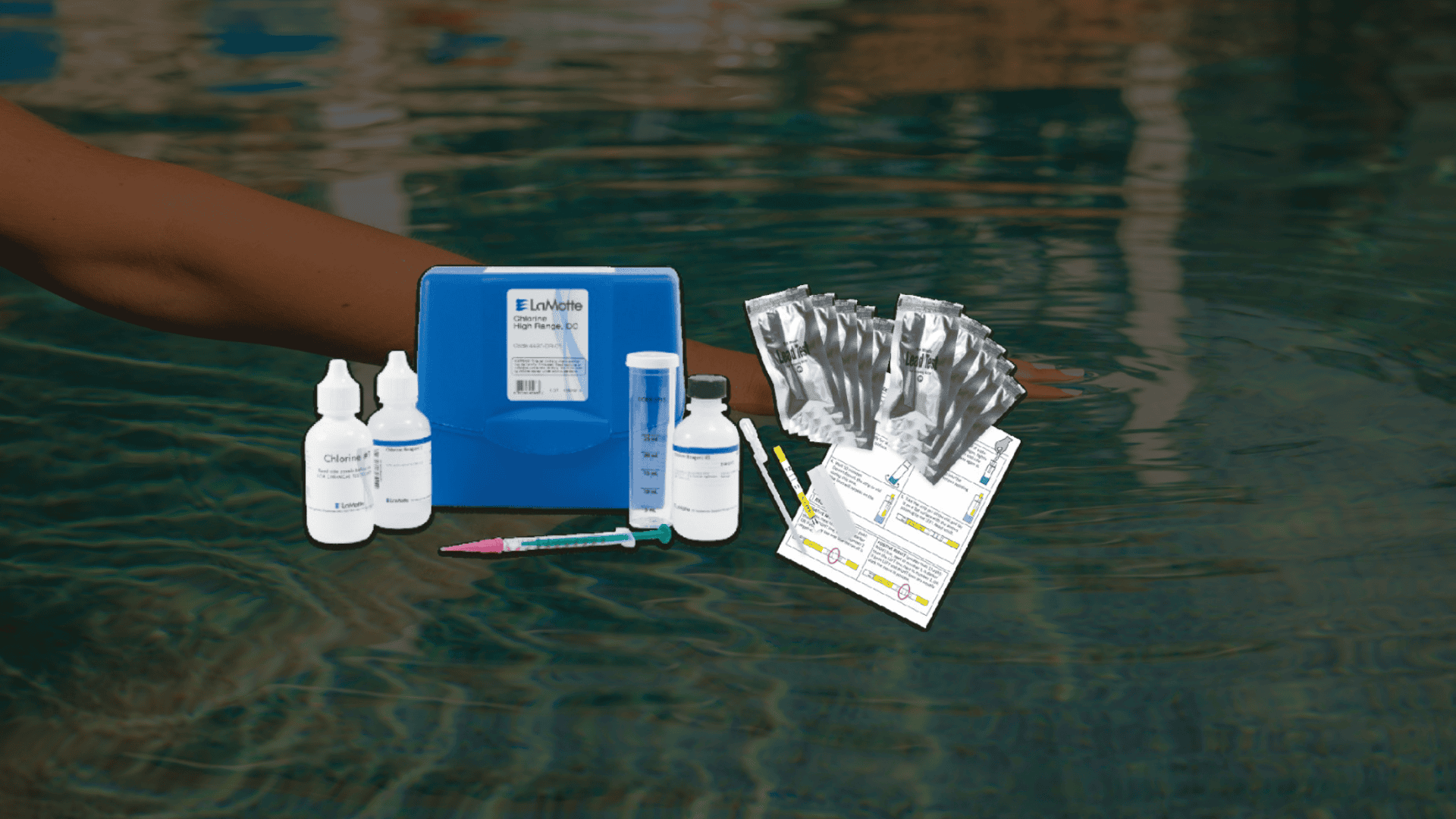
A reliable LaMotte chlorine test kit can provide a structured approach to routine chlorine analysis. However, obtaining meaningful results depends on following the correct procedure every time.
Following LaMotte Water Test Kit Instructions
When using a LaMotte kit, the manufacturer’s instructions should be treated as part of the testing method—not an optional step.
The LaMotte water test kit instructions specify important details such as:
- Correct sample collection
- Sample volume
- Reagent quantity
- Reagent addition sequence
- Mixing procedure
- Reaction time
- Result interpretation
- Appropriate testing range
Changing any of these steps can affect the result.
For example, adding too much or too little reagent, reading a colour reaction outside its specified time or using an incorrectly collected sample can introduce variability.
For professional pool technicians, standardising the testing procedure between operators is particularly important because it makes results easier to compare over time.
Understanding LaMotte Chlorine Test Kit Instructions
The same principle applies when using LaMotte chlorine test kit instructions.
Before beginning a chlorine test, users should confirm which chlorine parameter the kit is designed to measure and the concentration range it covers.
This is especially important when choosing between different testing methods.
A test designed for a higher concentration range may not be the most appropriate choice when investigating low chlorine concentrations. Conversely, a low-range method may not be suitable for measuring elevated concentrations.
The correct testing range should therefore be selected according to the application.
Are Low Range Chlorine Test Strips Suitable?
Low range chlorine test strips can be useful when rapid screening is required within the concentration range covered by the specific strip.
Their advantages include:
- Fast results
- Minimal equipment
- Simple operation
- Convenient field testing
- No liquid reagent preparation
However, test strips should be used according to their specified measurement range and instructions. They should not automatically be treated as interchangeable with reagent-based or instrument-based testing.
For professional applications, the choice between strips and a reagent-based LaMotte water test kit should be based on the required accuracy, measurement range, testing frequency and application.
What About Lead Testing in Pool Water?
Lead is not normally a primary parameter for routine pool-water chemistry, but screening can be relevant when there is a specific concern about lead contamination.
Potential sources may include:
- Older plumbing components
- Corrosion
- Contaminated source water
- Infrastructure or fittings
LaMotte Pacific’s Lead Screening Test Kit provides a screening approach for identifying potential lead contamination.
Importantly, screening is different from definitive laboratory analysis. A positive or concerning screening result should be investigated using an appropriate confirmatory analytical method.
This makes lead screening a useful risk-management tool where there is a reason to investigate potential contamination, rather than something that needs to replace routine chlorine and pH testing.
Building a Better Pool Water Testing Routine
A consistent testing workflow can make pool maintenance more reliable.
1. Collect the sample correctly
Take a representative sample from the pool rather than immediately beside a chemical dosing point or return outlet.
2. Identify the parameter
Determine whether you need to measure free chlorine, total chlorine, pH, alkalinity or another parameter.
3. Select the appropriate test range
Make sure the selected kit or low range chlorine test strips are suitable for the expected concentration.
4. Follow the instructions
Use the specified sample volume, reagent quantity, reaction time and interpretation method.
5. Record the result
Tracking results over time can reveal trends that a single measurement cannot.
6. Take corrective action
Adjustments should be based on measured results and the requirements applicable to the pool.
Testing Turns Pool Maintenance into Preventative Management
Effective water testing for swimming pool maintenance is ultimately about making decisions based on evidence rather than appearance.
Regular chlorine monitoring helps verify sanitiser conditions, while appropriate screening can help identify specific contamination concerns. Most importantly, consistent procedures ensure that test results remain meaningful from one test to the next.
LaMotte Pacific’s range of testing solutions, including its Lead Screening Test Kit and Total Chlorine Test Kit, gives pool professionals and water-quality users practical tools for different testing requirements.
Whether you’re using a reagent-based test or low range chlorine test strips, the principle remains the same: test the right parameter, use the appropriate measurement range and follow the instructions consistently.
Frequently Asked Questions
- How often should swimming pool water be tested?
Testing frequency depends on pool type, bather load, weather conditions and local requirements. Commercial and heavily used pools generally require more frequent monitoring than residential pools.
- Why are LaMotte water test kit instructions important?
They specify the sample volume, reagent quantities, testing sequence, reaction time and interpretation method required for the particular kit. Following them consistently helps improve the reliability and repeatability of results.
- Are low range chlorine test strips suitable for every pool?
No. Low-range strips are designed for specific concentration ranges. Always compare the strip’s stated range with the chlorine levels you need to measure.
- Should lead be tested routinely in swimming pools?
Lead is not generally part of routine pool chemistry testing. Lead screening is more appropriate where there is a specific reason to investigate potential contamination, such as concerns about plumbing or the source water.
- What does a total chlorine test measure?
Total chlorine represents free chlorine plus combined chlorine. Comparing total and free chlorine measurements can provide insight into the presence of combined chlorine.
- Can test strips replace a professional water test kit?
Test strips are convenient for routine screening, but they have defined measurement ranges and limitations. For professional applications, the testing method should be selected according to the required parameters, range and level of analytical confidence.
For Further Enquiry Contact: sales@lamottepacific.com