Clear pool water does not always mean balanced water chemistry. Dissolved metals, including copper, can contribute to staining, discolouration and maintenance challenges. For pool technicians and maintenance professionals, testing for copper can help identify potential problems before choosing corrective action.
Knowing how to test for copper in pool water is an important part of a comprehensive water-testing routine. LaMotte Pacific offers two practical options: the Low Range Copper Test Kit and the Copper & Iron MetChek Test Kit.
Why Is Copper Testing Important in Swimming Pools?
Copper can enter pool water through source water, corrosion of metal components or copper-based pool treatment products. When dissolved copper interacts with changing water chemistry, it may contribute to blue-green staining on pool surfaces or discolouration of hair and other materials.
Copper-related problems can be mistaken for algae or general water imbalance. Testing helps establish whether copper is present before treatment decisions are made.
Regular water testing for swimming pool maintenance should therefore consider more than chlorine and pH. When staining, discolouration or a history of metal-containing products raises concerns, checking copper levels can provide useful diagnostic information.
How to Test for Copper in Pool Water
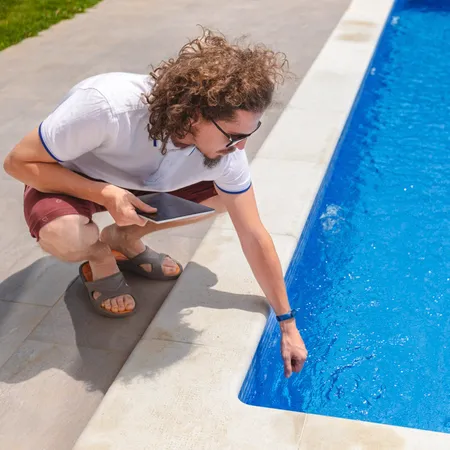
A colour-comparison test kit offers a straightforward way to estimate copper concentration in a pool water sample.
For reliable results:
- Collect a representative water sample in a clean test tube.
- Follow the selected kit’s instructions for the sample volume and reagent addition.
- Allow the reaction to develop for the specified time, if required.
- Compare the resulting colour with the supplied chart under suitable lighting.
- Record the copper concentration in parts per million (ppm).
Use the correct procedure for the specific kit, and rinse the testing equipment thoroughly between tests. If a result falls outside the kit’s measurement range, follow the manufacturer’s guidance rather than estimating the concentration.
Testing is especially useful when copper staining is suspected, source water may contain metals, or a treatment product introduces copper. Results should be considered alongside pH, sanitiser levels and other relevant water chemistry measurements.
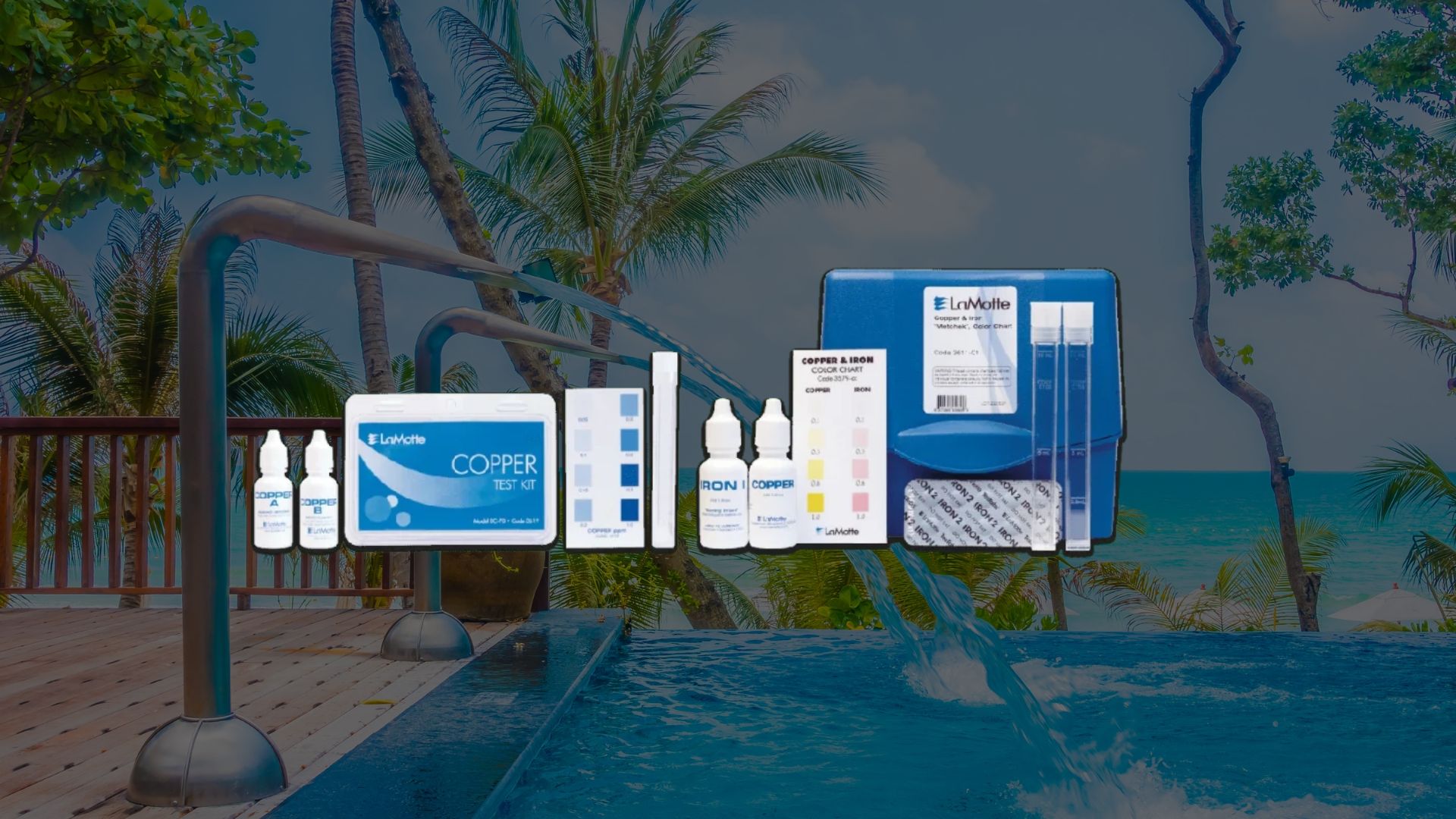
LaMotte Pacific Low Range Copper Test Kit
The Low Range Copper Test Kit is designed for users who want to measure copper at relatively low concentrations.
Its key features include:
- Measurement range: 0.05–1.0 ppm copper.
- Eight colour standards: 0.05, 0.10, 0.15, 0.20, 0.30, 0.50, 0.70 and 1.0 ppm.
- Testing capacity: Approximately 50 tests.
- Test method: Cuprizone colour comparison.
The multiple colour standards provide several measurement points across the specified range, making the kit useful when investigating low-level copper concentrations in pool water.
For technicians who primarily need to monitor copper, this dedicated kit offers a focused testing option.
LaMotte Copper & Iron MetChek Test Kit
Sometimes, investigating pool staining requires checking more than one metal. The Copper & Iron MetChek Test Kit measures both copper and iron using a colour chart.
Its specifications include:
- Copper range: 0.1, 0.3, 0.6 and 1.0 ppm.
- Iron range: 0.1, 0.3, 0.6 and 1.0 ppm.
- Testing capacity: Approximately 50 tests.
- Testing method: Reagent-based colour comparison.
For copper testing, the procedure uses three drops of copper reagent in a 5 mL water sample. Iron testing uses its specified reagent and tablet procedure. Follow the kit instructions for the correct sequence and colour comparison.
By checking two metals with one kit, pool professionals can investigate whether copper, iron or both may be contributing to a water quality issue.
Choosing the Right Kit for Professional Pool Water Testing
The right option depends on the testing objective.
Choose the Low Range Copper Test Kit when you need a dedicated copper test with more colour comparison points across the 0.05–1.0 ppm range.
Choose the Copper & Iron MetChek Test Kit when you want to check both metals using a single kit, particularly when investigating staining or discolouration.
Neither kit replaces routine testing for chlorine, pH, alkalinity and other essential pool water parameters. Instead, they provide additional information when metal contamination is a concern.
Support Better Pool Maintenance with Targeted Testing
Professional pool water testing is most useful when it measures the parameters relevant to the problem. Testing copper can help technicians investigate staining, assess possible metal sources and make more informed maintenance decisions.
Explore LaMotte Pacific’s Low Range Copper and Copper & Iron MetChek Test Kits to find a solution suited to your pool water testing requirements.
Frequently Asked Questions
1. How do you test for copper in pool water?
Use a copper test kit, follow the reagent instructions and compare the developed colour with the supplied chart to estimate copper concentration in ppm.
2. What causes copper in swimming pool water?
Copper may enter through source water, corroding metal components or copper-based pool treatment products.
3. What is the difference between the two LaMotte copper test kits?
The Low Range Copper Test Kit measures copper at 0.05–1.0 ppm, while the MetChek kit tests both copper and iron at four specified levels.
4. Why include copper testing in pool maintenance?
Copper testing can help investigate metal-related staining and discolouration that routine chlorine and pH tests may not explain.
For Further Enquiry Contact: sales@lamottepacific.com