Maintaining a clean, comfortable swimming pool starts with one simple habit: regular water testing. Whether you manage a backyard pool yourself or rely on local pool water testing services, knowing what is happening in the water helps you make better decisions about chemical treatment and maintenance.
For Australian pool owners, two measurements are particularly important: chlorine and pH. Saltwater pools also require monitoring of salinity, while conductivity and Total Dissolved Solids (TDS) can provide additional information about the water.
So, what should you measure—and what makes a home pool water testing kit a practical choice?
What Are the Ideal Pool Chlorine and pH Levels?
There is no single chlorine number that applies to every pool because recommended disinfectant levels depend on factors such as the pool type, stabiliser use and local requirements.
As a general reference, the CDC recommends maintaining pool pH between 7.0 and 7.8, with at least 1 ppm chlorine in pools where cyanuric acid is not being used. When cyanuric acid or stabilised chlorine products are used, the recommendation is at least 2 ppm chlorine.
Australian requirements can also vary by jurisdiction and pool type. For example, NSW regulations specify a pH range of 7.0–7.8 for chlorine-disinfected public pools and require disinfectant and pH testing at prescribed intervals.
The key takeaway is simple: don’t judge pool water by appearance alone. Clear water can still have an unsuitable chemical balance.
Why Pool Water Testing at Home Matters
Pool chemistry can change with sunlight, swimmer load, rainfall, fresh-water additions and chemical treatment. Regular testing helps identify changes before they become bigger maintenance problems.
For homeowners, a basic testing routine can include:
- Chlorine
- pH
- Salt, for saltwater pools
- TDS and conductivity where useful
- Temperature
Testing consistently also makes it easier to understand trends rather than reacting to a single reading.
This is where choosing the best pool water test kit for your pool becomes important. A simple test strip may be suitable for quick checks, while a digital tester can provide more precise numerical readings and additional parameters.
Digital Testing for Chlorine and pH
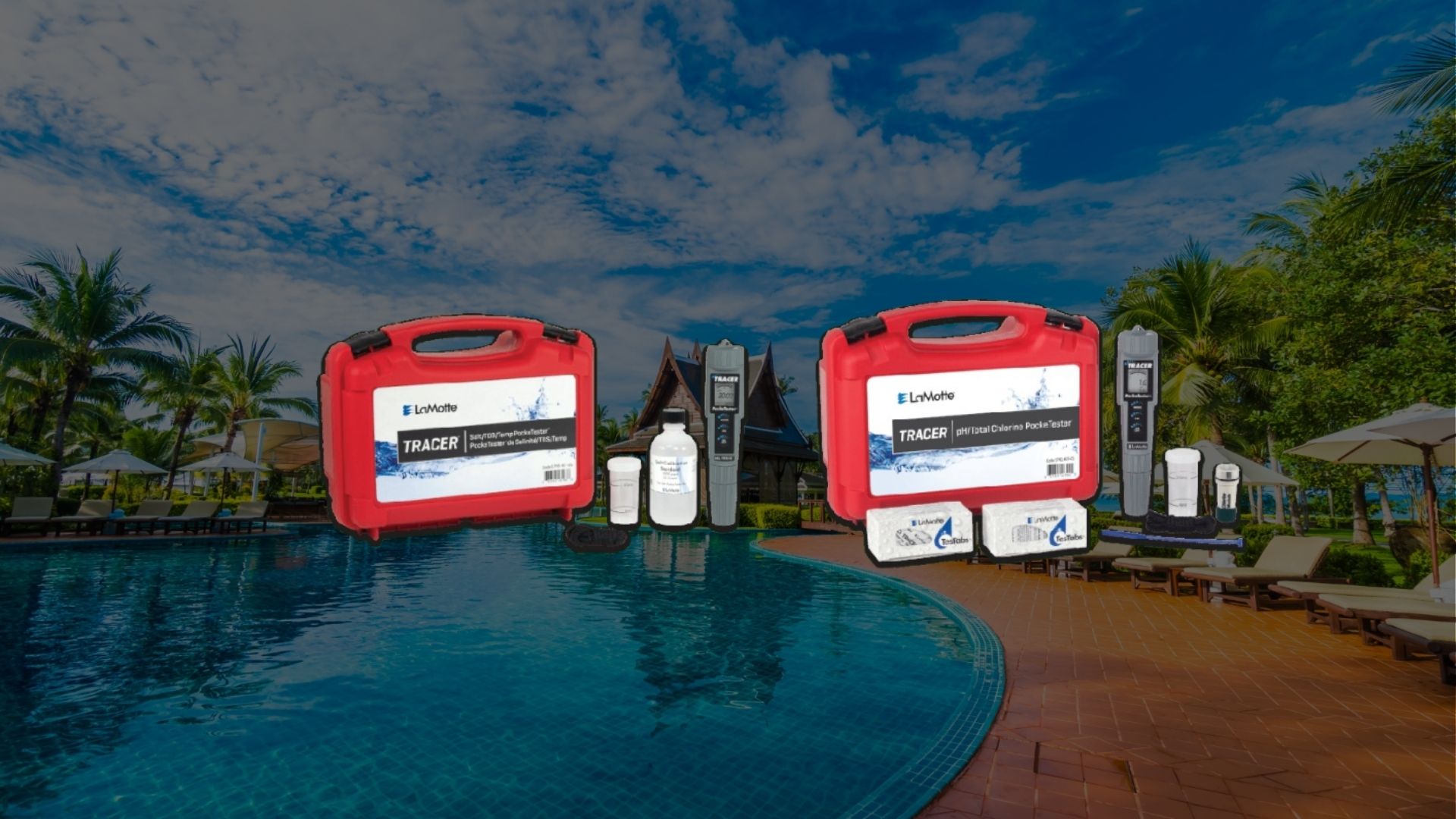
The LaMotte Pacific’s TRACER PockeTester™ range provides a portable alternative to conventional colour-based testing.
The Total Chlorine/pH/ORP TRACER PockeTester™ measures Total Chlorine from 0.01 to 10.00 ppm and pH from 0.00 to 14.00, with a stated pH accuracy of ±0.01. It also supports ORP and sample-temperature measurements, and stores up to 15 readings.
An important distinction is that total chlorine is not the same as free chlorine. Total chlorine includes free chlorine plus combined chlorine, so pool professionals should select their testing method according to the parameter they need to monitor.
For homeowners who want a compact instrument for repeatable digital measurements, however, a pH and total chlorine tester can form an important part of a broader testing routine.
Saltwater Pools Need More Than Chlorine Testing
Saltwater pools have another important measurement: salinity.
The Salt/TDS/Conductivity/Temperature TRACER PockeTester™ measures sodium chloride in saltwater pools from 0–9,999 ppm, alongside TDS, conductivity and temperature. It provides automatic temperature compensation, self-calibration and memory for up to 25 readings.
This makes it particularly useful when maintaining a saltwater system where checking salt concentration is part of routine water management.
TDS is also worth monitoring when investigating changing water quality. It represents the concentration of dissolved substances in the water, although TDS alone does not tell you whether a pool is safe or properly sanitised. Chlorine and pH still need to be assessed independently.
Home Testing or Local Pool Water Testing?
Both approaches have their place.
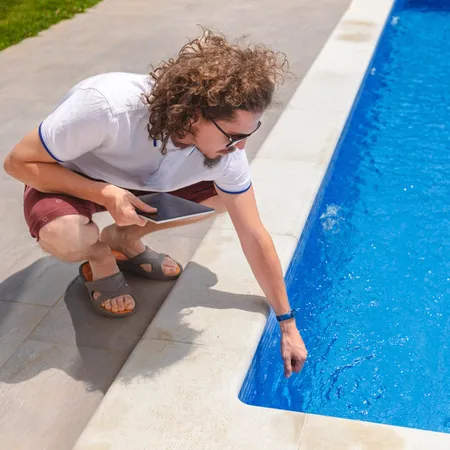
Pool water testing at home is convenient for routine monitoring. A homeowner can take measurements regularly and identify changes before scheduling professional assistance.
Local pool water testing can be useful when the water develops unusual characteristics, routine readings become difficult to interpret, or more comprehensive analysis is required.
The best approach is often a combination: test regularly at home and seek professional advice when results indicate a problem you cannot confidently diagnose.
Choosing a Home Pool Water Testing Kit
When comparing a home pool water testing kit, consider what your pool actually requires.
For a conventional chlorine pool, prioritise reliable chlorine and pH measurement. For a saltwater pool, look for a tester capable of measuring salinity as well as relevant supporting parameters such as TDS and conductivity.
The right equipment should also be practical enough to use consistently. Features such as digital readings, calibration, temperature compensation and measurement memory can make routine testing easier and more repeatable.
Ultimately, the best pool water test kit is not necessarily the one with the longest list of parameters. It is the one that measures the parameters relevant to your pool and fits naturally into your maintenance routine.
Make Testing Part of Pool Maintenance
Good pool care is less about correcting problems and more about detecting changes early. By regularly checking chlorine and pH—and monitoring salt and TDS where appropriate—pool owners can make more informed treatment decisions.
With portable digital instruments such as the TRACER PockeTester™ range from LaMotte Pacific, routine testing can become a straightforward part of pool water testing at home, rather than something reserved for when the water looks wrong.
FAQs
- What are the ideal pool chlorine and pH levels?
A commonly referenced pH range is 7.0–7.8. Chlorine requirements vary depending on the pool and whether cyanuric acid is used, so always follow applicable local requirements and product instructions.
- Is pool water testing at home reliable?
Yes, provided the test method is appropriate, the equipment is correctly calibrated and testing procedures are followed consistently.
- What should I test in a saltwater pool?
Chlorine and pH remain important, while salinity should also be monitored. TDS and conductivity can provide additional information about the water.
- Is a digital tester better than test strips?
It depends on the application. Digital testers can provide numerical measurements and additional parameters, while strips are useful for quick routine screening.
- How often should pool water be tested?
Routine testing frequency depends on pool usage, weather, disinfectant system and local requirements. During periods of heavy use or changing conditions, testing may need to be more frequent.
For Further Enquiry Contact: sales@lamottepacific.com