Maintaining crystal-clear, hygienic pool water requires more than simply monitoring chlorine and pH. While these remain critical water quality parameters, experienced pool operators know that hidden contaminants—particularly phosphates, copper, and iron—can significantly impact water clarity, sanitiser efficiency, and the lifespan of pool equipment.
As pools across Australia become more sophisticated, comprehensive swimming pool water testing Australia is increasingly focused on identifying these less visible water quality issues before they become costly problems. Investing in a reliable swimming pool water testing kit Australia that measures more than the basics enables pool owners and facility managers to maintain healthier, more stable water while reducing long-term maintenance costs.
Why Traditional Pool Testing Isn’t Always Enough
Routine pool testing typically focuses on:
- Free and total chlorine
- pH
- Total alkalinity
- Calcium hardness
While these parameters are essential, they don’t always explain recurring issues such as:
- Persistent algae growth
- Green or brown staining
- Cloudy water
- Reduced chlorine effectiveness
- Metallic water discolouration
In many cases, the underlying cause is elevated phosphate levels or dissolved metals in the water.
Without testing for these contaminants, operators often treat symptoms rather than the root cause.
Understanding Phosphates in Pool Water
Phosphates are naturally occurring compounds that enter pools from various sources, including:
- Rainwater
- Dust and soil
- Leaves and organic debris
- Fertilisers
- Swimmer products such as lotions and sunscreens
- Source water used for topping up pools
Although phosphates are not harmful to swimmers, they act as a nutrient for algae.
Even when chlorine levels are maintained correctly, elevated phosphate concentrations can make algae outbreaks more difficult to control.
Industry guidance generally suggests keeping phosphate concentrations as low as practical, with many pool professionals investigating treatment when levels exceed approximately 100–200 ppb, depending on pool conditions and maintenance practices.
Why Copper and Iron Matter
Metals are another frequently overlooked aspect of swimming pool water testing Australia.
Copper and iron commonly enter pool water through:
- Bore water
- Corroding plumbing
- Heat exchangers
- Mineral-rich source water
- Some algaecides
Even relatively low concentrations can create noticeable problems.
Copper May Cause:
- Blue-green water
- Green staining
- Green hair in swimmers with light-coloured hair
- Surface deposits
Iron May Cause:
- Brown or rust-coloured staining
- Yellow or orange water
- Discolouration after chlorination
- Scale formation
Once metal staining occurs, remediation can be significantly more expensive than routine monitoring.
Why Comprehensive Water Testing Saves Money
Water chemistry problems rarely occur in isolation.
For example:
High phosphate levels may encourage algae growth, leading operators to increase chlorine dosing unnecessarily.
Similarly, untreated metals may cause staining that requires specialised chemical treatments or surface restoration.
Industry studies have shown that proactive water testing and balanced chemical management can reduce annual chemical consumption by 20–30%, while also lowering maintenance costs and extending equipment life.
This highlights the value of using a comprehensive swimming pool water testing kit Australia rather than relying solely on basic chlorine tests.
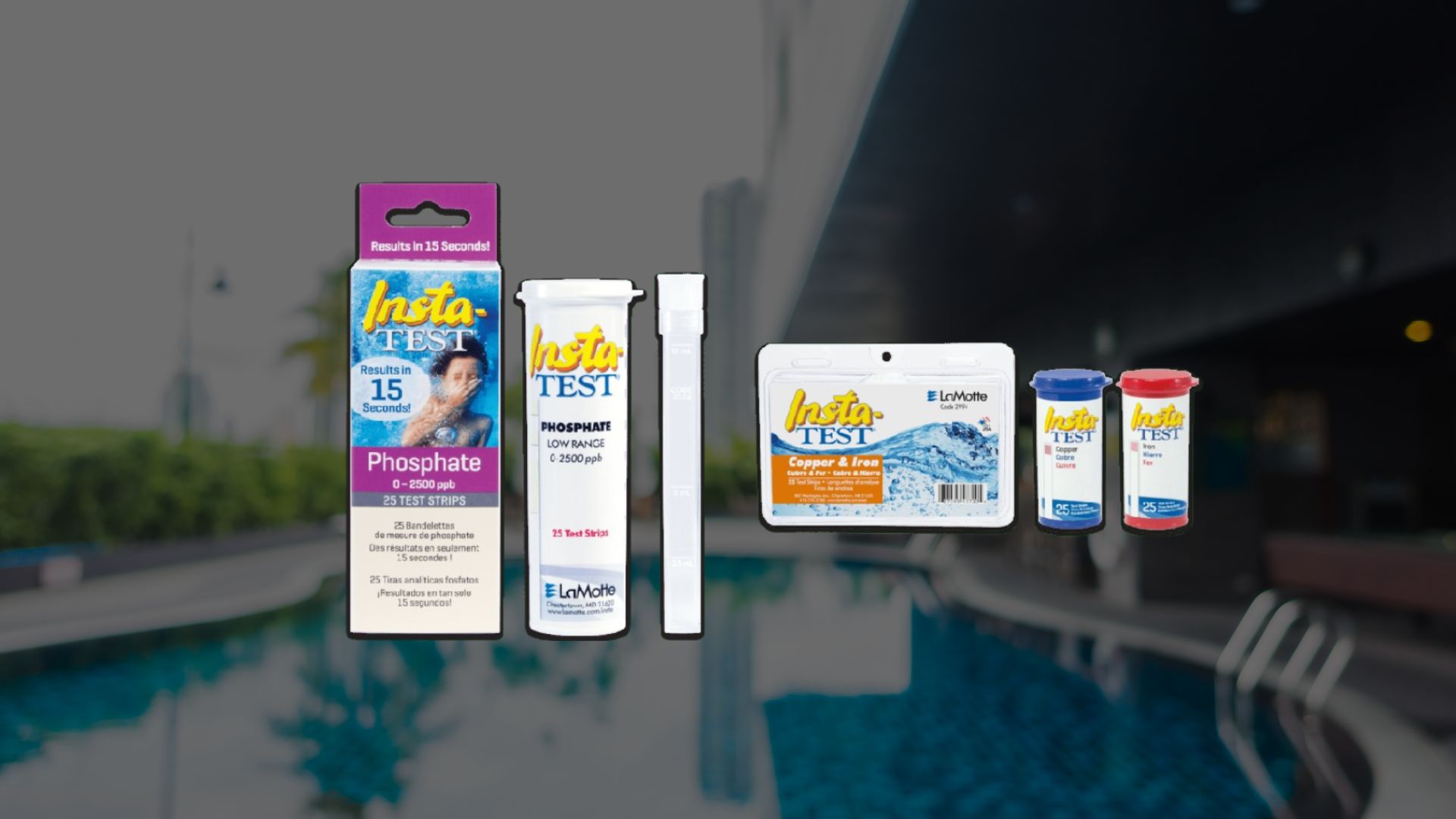
LaMotte Insta-TEST® Low Range Phosphate Test Strips
The Insta-TEST® Low Range Phosphate Test Strips from LaMotte Pacific are designed to provide a quick and convenient way to monitor phosphate concentrations in pool water.
Key Benefits
Early Detection
Identify elevated phosphate levels before algae becomes a visible problem.
Rapid Results
Obtain results in minutes without complicated procedures.
Simple Routine Monitoring
Easy-to-use strips support regular preventative maintenance.
Improved Chemical Efficiency
Reducing phosphate levels helps sanitisers work more effectively and can decrease the need for excessive chlorine dosing.
Routine phosphate monitoring allows pool operators to make informed decisions before water quality begins to decline.
LaMotte Insta-TEST® Copper & Iron Test Strip Kit
The Insta-TEST® Copper & Iron Test Strip Kit helps identify dissolved metals that are often overlooked during standard pool maintenance.
Why Metal Testing Matters
Testing for copper and iron helps operators:
- Prevent staining before it occurs
- Identify issues with source water
- Monitor equipment-related corrosion
- Improve troubleshooting when water becomes discoloured
For pools supplied by bore water or located in areas with naturally mineral-rich water, regular metal testing is particularly valuable.
A Preventive Approach to Pool Water Management
Successful swimming pool water testing Australia is increasingly based on prevention rather than correction.
Instead of waiting for visible problems, operators are adopting routine testing programs that include:
- Chlorine
- pH
- Alkalinity
- Calcium hardness
- Phosphate
- Copper
- Iron
This broader approach provides a much clearer understanding of overall water quality.
Best Practices for Comprehensive Pool Testing
To achieve reliable results:
Test Regularly
Commercial pools may require daily testing of core parameters and scheduled testing for phosphates and metals.
Monitor Source Water
New water added to the pool can introduce phosphates and dissolved metals.
Remove Organic Debris
Leaves and debris contribute to phosphate accumulation over time.
Record Results
Tracking water quality trends helps identify recurring issues before they escalate.
Address Root Causes
Treat elevated phosphate or metal levels directly rather than continually increasing chlorine levels.
Why Australian Pool Operators Are Expanding Their Testing Programs
Several industry trends are driving greater adoption of comprehensive water testing:
- Increasing use of saltwater pools
- Higher expectations for water clarity
- Rising chemical costs
- Greater focus on preventive maintenance
- Longer equipment life through improved water balance
Professional pool operators understand that better testing leads to better decision-making.
The Future of Swimming Pool Water Testing
Modern pool maintenance is shifting toward data-driven water management.
Rather than reacting to algae blooms or staining after they occur, facilities are using advanced testing to predict and prevent problems.
As technology continues to evolve, comprehensive testing for nutrients, metals, and traditional water chemistry parameters will become standard practice across both residential and commercial pools.
The Bottom Line
Maintaining healthy pool water requires more than monitoring chlorine alone. Hidden contaminants such as phosphates, copper, and iron can significantly impact water quality, chemical efficiency, and equipment performance.
By incorporating phosphate and metal testing into a regular maintenance routine, pool owners and operators gain a more complete understanding of water chemistry and can address issues before they become costly.
LaMotte Pacific’s Insta-TEST® Low Range Phosphate Test Strips and Insta-TEST® Copper & Iron Test Strip Kit provide fast, practical, and reliable solutions for comprehensive swimming pool water testing Australia. Together, they help support clearer water, more efficient chemical use, and longer-lasting pool infrastructure—making them valuable additions to any professional swimming pool water testing kit Australia.
Frequently Asked Questions
1. Why should I test for phosphates in my pool?
Phosphates act as a food source for algae. Monitoring phosphate levels helps prevent algae growth and supports more effective sanitiser performance.
2. What causes copper and iron in pool water?
Common sources include bore water, corroding plumbing, mineral-rich source water, heat exchangers, and certain pool chemicals.
3. How often should phosphates and metals be tested?
Testing is recommended as part of routine maintenance, especially after heavy rain, adding new water, or if algae or staining problems develop.
4. Can phosphate and metal testing reduce maintenance costs?
Yes. Early detection helps prevent algae outbreaks, staining, unnecessary chemical use, and expensive corrective treatments.
5. What should a comprehensive swimming pool water testing kit include?
A well-rounded kit should monitor chlorine, pH, alkalinity, hardness, and additional parameters such as phosphates and dissolved metals for complete water quality management.
For Further Enquiry Contact: sales@lamottepacific.com