Maintaining balanced pool water is one of the most important responsibilities for pool owners and facility managers. While factors like pH, alkalinity, and hardness all play critical roles, chlorine remains the primary line of defence against bacteria, algae, and harmful contaminants.
However, effective disinfection depends on one key factor: accurate testing.
Across residential and commercial facilities, demand is growing for reliable pool chlorine test kit Australia solutions that deliver fast, precise, and repeatable results. As pools become more heavily used and water quality standards continue to rise, operators are moving beyond basic visual checks toward more consistent testing systems.
One of the most trusted methods for professional chlorine analysis remains DPD tablet testing.
Why Chlorine Levels Matter More Than Ever
Chlorine is responsible for eliminating microorganisms and maintaining hygienic swimming conditions. But chlorine only works effectively when maintained within the correct concentration range.
Generally recommended chlorine levels are:
- 1–3 ppm for residential pools
- 2–5 ppm for commercial and high-use pools
If chlorine levels fall too low:
- Bacteria and algae can multiply rapidly
- Water clarity deteriorates
- Health risks increase
If chlorine levels rise too high:
- Swimmers may experience skin and eye irritation
- Chlorine odours become stronger
- Pool surfaces and equipment may deteriorate faster
This balance makes accurate monitoring critical for every pool environment.
The Limitations of Basic Chlorine Testing
Many traditional testing methods rely on:
- Colour strips
- Liquid reagents
- Visual comparison charts
While useful for quick checks, these methods can be affected by:
- Lighting conditions
- User interpretation
- Reagent inconsistency
- Contamination during handling
Even small inaccuracies can result in improper dosing decisions.
For commercial facilities, where compliance and consistency are essential, more dependable methods are often required.
Why DPD Testing Remains the Industry Standard
DPD (Diethyl-p-Phenylenediamine) testing is widely regarded as one of the most accurate and reliable methods for chlorine analysis.
When DPD reagents react with chlorine in water, they produce a measurable colour change that can be analysed visually or digitally.
The advantages of DPD testing include:
- High sensitivity and precision
- Reliable free chlorine detection
- Consistent reagent dosing
- Compatibility with digital photometers and manual comparators
Because of its accuracy and repeatability, DPD testing is commonly used in professional pool management and water treatment applications worldwide.
The Benefits of Tablet-Based Chlorine Testing
Tablet reagents offer several advantages over liquid testing systems.
1. Pre-Measured Accuracy
Each tablet contains a consistent amount of reagent, reducing dosing errors.
2. Longer Shelf Stability
Tablet reagents generally maintain stability longer than liquid alternatives.
3. Cleaner Handling
No spilling, dripping, or complicated mixing procedures.
4. Improved Repeatability
Results remain more consistent across different operators.
This is why many professionals prefer tablet-based pool chlorine test kit Australia systems for routine monitoring.
LaMotte Rapid Testabs®: Designed for Fast and Reliable Chlorine Testing
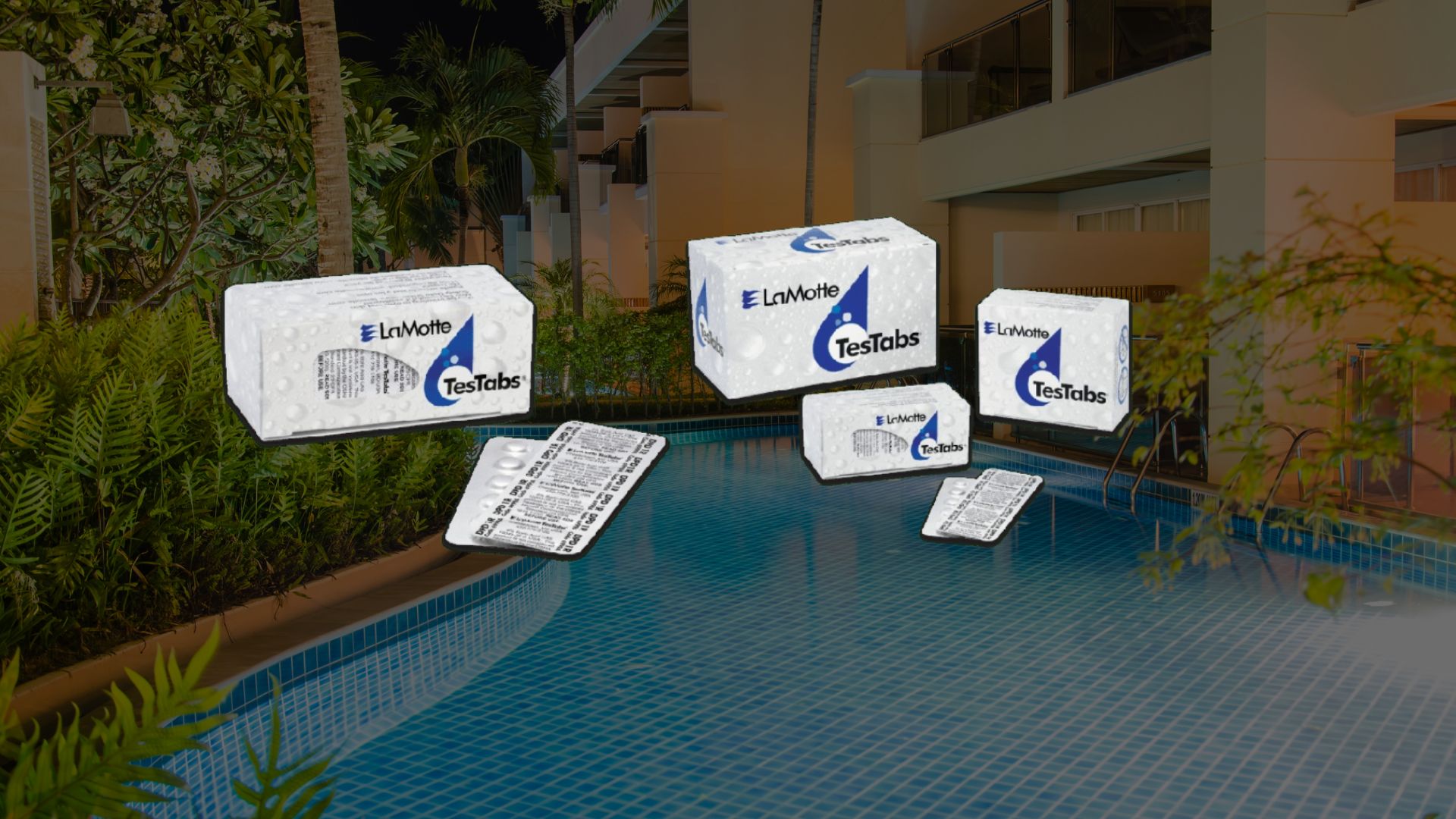
LaMotte Pacific’s Rapid Testabs® range provides a professional-grade approach to chlorine testing, combining accuracy with operational convenience.
Chlorine DPD 1 Rapid Testabs® Tablets
The Chlorine DPD 1 Rapid Testabs® Tablets are designed for fast free chlorine testing in pools and spas.
Key advantages include:
- Rapid dissolution for faster testing
- Accurate free chlorine measurement
- Consistent tablet formulation
- Easy integration with manual or digital testing systems
For operators seeking dependable chlorine analysis, this provides a highly efficient solution.
Flexible Pack Sizes for Different Applications
Pool facilities vary significantly in size and testing frequency. LaMotte offers multiple pack options to suit different operational needs.
Chlorine DPD 1 Rapid Testabs® 100 Pack
The 100 Pack is ideal for:
- Residential pools
- Small commercial facilities
- Lower-frequency testing environments
It provides a practical balance between convenience and operational efficiency.
Chlorine DPD 1 Rapid Testabs® 1000 Pack
The 1000 Pack is designed for:
- High-volume testing environments
- Public pools and aquatic centres
- Facilities requiring frequent daily analysis
Bulk packaging supports consistent testing routines while reducing supply interruptions.
Why Accurate Chlorine Testing Reduces Operating Costs
Many pool operators focus primarily on sanitiser costs, but inaccurate testing can create hidden expenses across the entire operation.
Overdosing Chemicals
Inaccurate readings often lead to excessive chlorine use, increasing chemical consumption unnecessarily.
Equipment Damage
Improper water balance contributes to:
- Corrosion
- Scale formation
- Pump wear
- Filter stress
Reactive Maintenance
Poor chlorine control often results in:
- Shock treatments
- Algae remediation
- Emergency water balancing
Industry data suggests that improved testing accuracy can reduce overall pool chemical waste by up to 20–30% annually.
The Role of Chlorine Testing in Compliance and Safety
Commercial facilities across Australia face increasing expectations around water safety and hygiene.
Consistent chlorine testing supports:
- Safer swimming conditions
- Better water clarity
- Reduced contamination risk
- Improved regulatory compliance
Maintaining accurate testing records is also critical for operational accountability and quality assurance.
Best Practices for Chlorine Testing
To maximise accuracy and consistency:
Test Water Frequently
Commercial pools should typically test multiple times daily, depending on usage levels.
Use Fresh Water Samples
Stale samples can alter chlorine readings.
Follow Recommended Timing
DPD reactions should be read within the recommended timeframe for accurate results.
Store Tablets Properly
Keep reagents in cool, dry conditions to maintain stability.
Record Results Consistently
Tracking trends helps identify emerging water balance issues early.
Why Pool Operators Are Upgrading Their Testing Methods
The Australian pool industry is becoming increasingly data-driven and efficiency-focused.
Key trends driving demand for advanced pool chlorine test kit Australia solutions include:
- Rising chemical costs
- Greater compliance expectations
- Increased pool usage
- Focus on operational sustainability
- Need for faster and more accurate testing workflows
Professional-grade reagent systems help operators respond to these challenges with greater confidence and consistency.
The Future of Pool Chlorine Testing
As technology continues to evolve, chlorine testing is becoming faster, more accurate, and more integrated with digital water management systems.
However, the core principle remains unchanged: reliable data is essential for maintaining safe and balanced water.
Tablet-based DPD testing continues to play a central role because of its proven accuracy, simplicity, and operational reliability.
The Bottom Line
Maintaining correct chlorine levels is one of the most important aspects of pool management. But achieving effective water balance depends entirely on accurate testing.
LaMotte Pacific’s Rapid Testabs® range provides a dependable, professional-grade solution for facilities seeking a reliable pool chlorine test kit Australia.
With consistent reagent quality, rapid dissolution, and flexible pack sizes, these tablets support smarter chlorine management, improved water quality, and more efficient pool operations.
FAQs
- What is DPD chlorine testing?
DPD testing uses a reagent that reacts with chlorine to measure sanitiser levels accurately.
- Why are tablet reagents better than liquid reagents?
Tablet reagents provide more consistent dosing, cleaner handling, and longer shelf stability.
- How often should pool chlorine levels be tested?
Commercial pools often require multiple daily tests, while residential pools should be tested regularly.
- What is the ideal chlorine level for pools?
Typically, between 1–3 ppm for residential pools and 2–5 ppm for commercial pools.
- Why is accurate chlorine testing important?
It ensures proper sanitisation, reduces chemical waste, and helps protect swimmers and equipment.
For Further Enquiry Contact: sales@lamottepacific.com