Maintaining clean, safe, and compliant pool water isn’t just about aesthetics—it’s a matter of health, operational efficiency, and long-term cost control. Whether you manage a commercial facility or a residential pool, selecting the right pool chlorine test kit Australia is critical to ensuring optimal water quality.
With increasing awareness around waterborne contaminants and stricter pool safety guidelines, the demand for reliable chlorine test kits and swimming pool test kits has grown significantly across Australia.
Why Chlorine Testing Matters More Than Ever
Chlorine plays a vital role in eliminating harmful microorganisms such as bacteria, viruses, and algae. However, maintaining the correct concentration is key:
- Too low (<1 ppm): Increased risk of microbial contamination
- Optimal range (1–3 ppm): Effective disinfection with minimal irritation
- Too high (>5 ppm): Skin, eye irritation, and potential equipment corrosion
Public health standards across Australia recommend maintaining chlorine within controlled limits to ensure swimmer safety and regulatory compliance.
Without consistent monitoring using a reliable chlorine tester, even well-maintained pools can quickly fall out of balance due to factors like UV exposure, organic load, and rainfall dilution.
The Shift Toward Rapid Test Strip Solutions
Traditional liquid testing methods are gradually being replaced by advanced test strip technologies due to their speed, ease of use, and cost efficiency.
Modern chlorine test kits—particularly test strips—offer:
- Results in under 30 seconds
- No reagent handling or mixing errors
- Reduced training requirements
- High portability for on-site testing
For pool operators, this translates to faster decision-making and lower operational complexity.
Key Parameters Every Swimming Pool Test Kit Should Cover
A comprehensive swimming pool test kit should measure more than just chlorine. Balanced water chemistry depends on multiple interacting factors:
1. Free Chlorine
The active disinfectant is responsible for killing bacteria and pathogens.
2. Total Chlorine
Indicates combined chlorine (chloramines), which can cause strong odors and irritation.
3. pH Levels
Impacts chlorine efficiency—chlorine becomes less effective when pH exceeds 7.8.
4. Water Hardness
Prevents corrosion and scaling in pool infrastructure.
Monitoring all these parameters together ensures optimal water balance and extends equipment lifespan.
LaMotte Insta-TEST® Strips: Precision Meets Simplicity
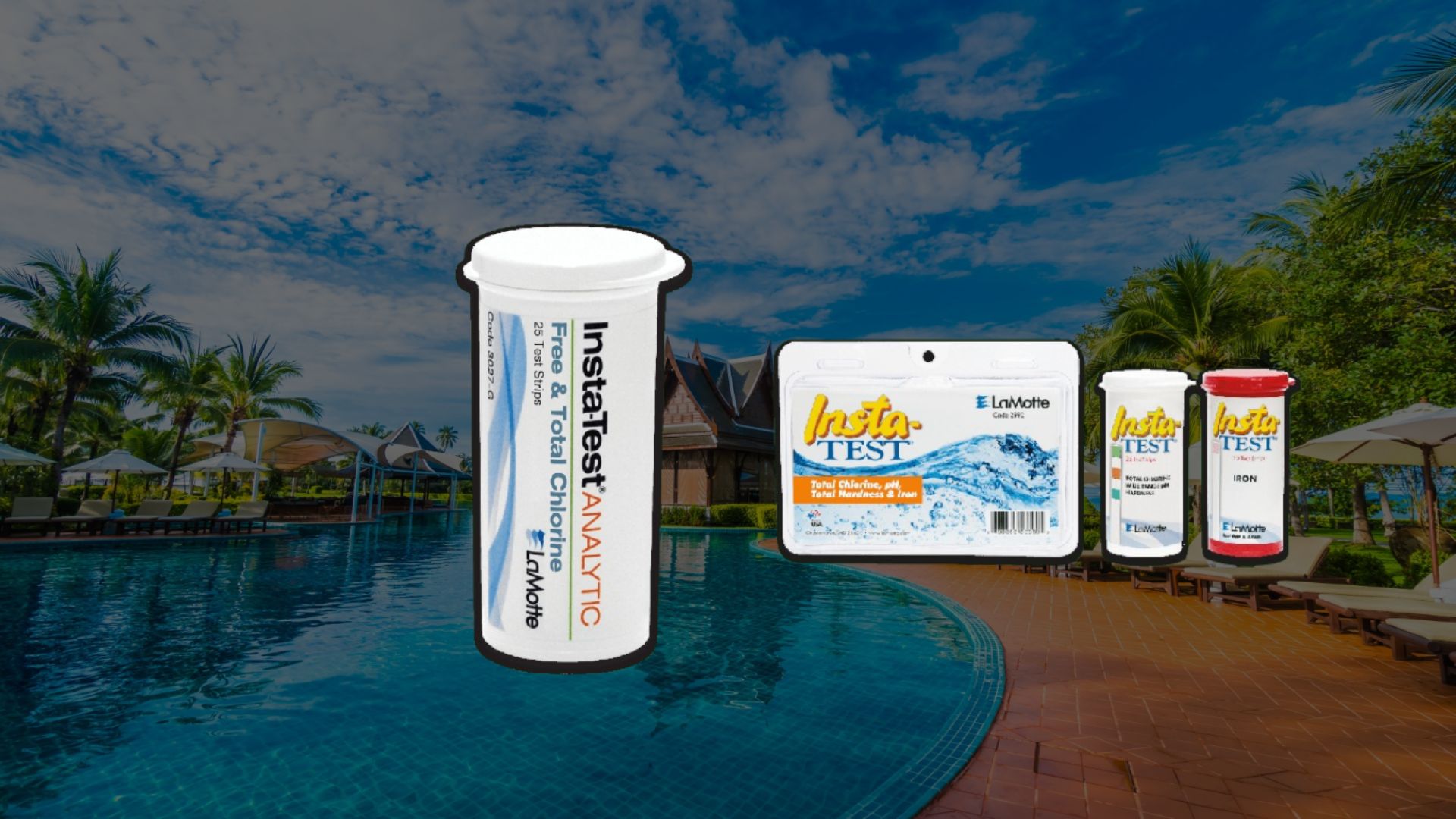
LaMotte Pacific offers a range of chlorine test kits designed for accuracy, speed, and ease of use. Their Insta-TEST® strips are widely used across commercial pools, spas, and water treatment facilities.
Multi-Parameter Testing in One Step
The Insta-TEST® Iron, pH, Hardness & Total Chlorine Test Strips provide a comprehensive snapshot of pool chemistry in a single dip. This makes them ideal for routine monitoring where multiple parameters need to be assessed quickly.
Key advantages:
- Simultaneous testing of 4 critical parameters
- Reduces testing time and operational effort
- Suitable for both pools and water treatment systems
Low-Range Precision for Free Chlorine
For environments requiring tighter chlorine control, such as spas or sensitive systems, the Insta-TEST® Free Chlorine Low Range Test Strips offer enhanced sensitivity.
Why this matters:
- Detects low chlorine concentrations accurately
- Ideal for maintaining precise disinfection levels
- Helps avoid underdosing risks
Dual Chlorine Monitoring for Better Control
The Insta-TEST® Free & Total Chlorine Test Strips allow users to differentiate between free and combined chlorine levels.
Operational benefit:
- Identifies chloramine buildup early
- Enables corrective actions like shock dosing
- Improves water clarity and reduces odour
Data-Driven Benefits of Using Test Strips
From an operational perspective, switching to high-quality test strips can deliver measurable benefits:
- Time Efficiency: Up to 70% faster testing compared to traditional titration methods
- Cost Reduction: Lower reagent and labour costs over time
- Consistency: Reduced human error in readings
- Compliance: Easier documentation for routine testing logs
For facility managers handling multiple pools, these efficiencies can significantly impact overall operational performance.
How to Choose the Right Chlorine Tester
When selecting a chlorine tester or pool chlorine test kit Australia, consider the following:
1. Testing Frequency
High-traffic pools require frequent testing—opt for quick and easy solutions like strips.
2. Parameter Coverage
Ensure the kit measures essential parameters relevant to your pool type.
3. Sensitivity Requirements
Low-range detection is crucial for spas and controlled environments.
4. Ease of Use
User-friendly kits reduce training time and improve compliance.
5. Environmental Conditions
Outdoor pools may require more frequent testing due to UV chlorine degradation.
Best Practices for Accurate Pool Testing
Even with the best chlorine test kit, accuracy depends on proper usage:
- Test water at consistent times daily
- Avoid testing immediately after chemical dosing
- Store test strips in cool, dry conditions
- Follow the manufacturer’s instructions carefully
- Record and track results for trend analysis
Consistent monitoring not only ensures safety but also helps optimise chemical usage and reduce long-term costs.
The Bottom Line
Choosing the right swimming pool test kit is no longer just a technical decision—it’s a strategic one. With increasing regulatory scrutiny and higher expectations for water quality, reliable testing solutions are essential.
LaMotte Pacific’s Insta-TEST® range provides a practical balance of accuracy, speed, and operational efficiency—making it a strong choice for anyone looking to maintain optimal pool water conditions.
For pool operators, facility managers, and homeowners alike, investing in a high-quality pool chlorine test kit Australia ensures safer water, better user experience, and smarter resource management.
FAQs
- What is the ideal chlorine level for swimming pools in Australia?
The recommended range is typically between 1–3 ppm for safe and effective disinfection.
- How often should I use a chlorine test kit?
Daily testing is recommended for public pools, while residential pools should be tested at least 2–3 times per week.
- What’s the difference between free and total chlorine?
Free chlorine is the active disinfectant, while total chlorine includes both free chlorine and combined chlorine (chloramines).
- Are test strips accurate for pool testing?
Yes, high-quality test strips provide reliable and fast results when used correctly.
- Why is pH important in chlorine testing?
pH affects chlorine efficiency—imbalanced pH can reduce disinfection effectiveness.
For Further Enquiry Contact: sales@lamottepacific.com