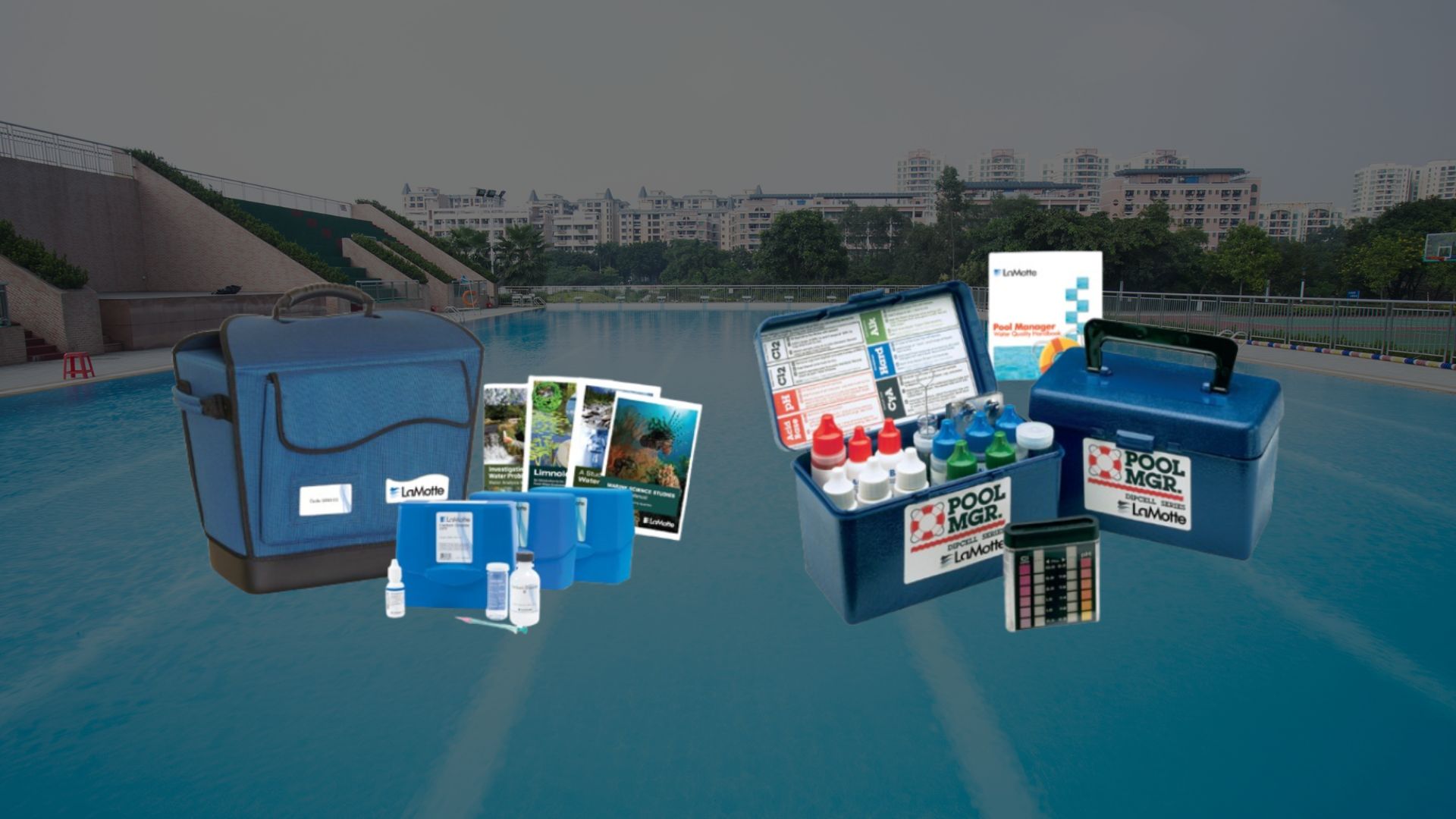
Australia’s pool season stretches longer each year, with many regions experiencing extended heatwaves and higher bather loads. This means pool water balance must be monitored with more precision and consistency than ever before. While chlorine levels often get the most attention, the true stability of a swimming pool depends on three equally important pillars: salt levels, alkalinity and hardness balance, and cyanuric acid control.
For pool owners, technicians, and aquatic facilities looking for reliable swimming pool test kits in Australia, LaMotte Pacific offers scientifically validated, easy-to-use solutions. In this guide, we break down why these parameters matter and how the Sodium Chloride (Salt) Test Kit, Alkalinity & Calcium Hardness Test Kit, and Cyanuric Acid Test Kit form the core of dependable pool water balance.
Why Water Balance Matters More Than Ever
Across Australian states, water quality compliance guidelines emphasise three primary concerns:
1. Swimmer Comfort
Imbalanced water can cause eye irritation, dry skin, and a harsh swimming experience.
2. Equipment Longevity
Incorrect salt levels and improper hardness can severely damage pumps, chlorinators, and heaters.
3. Chemical Efficiency
A well-balanced pool uses fewer chemicals and maintains sanitiser levels more consistently.
Digital testers and automated controllers have become more common, but even the best systems rely on accurate baseline measurements. This is why a high-quality pool test kit in Australia remains essential for daily and weekly maintenance.
1. Sodium Chloride (Salt) Test Kit: Precision for Saltwater Pools
Saltwater pools account for up to 70% of new pool installations in Australia. These systems use electrolysis to convert salt into free chlorine, making consistent salt concentration critical.
Why Salt Levels Matter
Most salt chlorinators operate between 3,500 and 4,500 ppm. Levels outside this range lead to:
- Low chlorine production
- Premature cell corrosion
- System malfunction and high electricity consumption
Salt concentration can fluctuate due to rainfall, splash-out, backwashing, or dilution during top-ups. Because electronic salinity sensors can drift over time, a chemical-based verification method is essential.
LaMotte Sodium Chloride Test Kit: Key Advantages
- Uses a silver nitrate titration method for laboratory-grade accuracy
- Simple, fast test design for homeowners and professionals
- Reliable verification for chlorinator calibration
- Essential for diagnosing low chlorine output complaints
This kit is one of the most effective manual tools for maintaining saltwater system performance and is considered a staple for anyone needing trustworthy testing beyond what digital controllers display.
2. Alkalinity & Calcium Hardness Test Kit: The Backbone of Stable Water Chemistry
Two parameters that often go unnoticed but directly influence every other aspect of pool chemistry are total alkalinity and calcium hardness.
Total Alkalinity (TA): The pH Stabiliser
TA acts as a buffer, preventing pH from rising or falling too rapidly. In Australia’s climate—where pools are exposed to high evaporation rates, strong UV, and frequent top-ups—alkalinity can drift quickly.
Recommended TA levels:
80–120 ppm for most pools
60–80 ppm for saltwater pools (to minimise scaling)
Low TA causes:
- Rapid pH fluctuations
- Corrosive water
- Etching of plaster surfaces
- Inefficient chlorine performance
High TA causes:
- Cloudy water
- Persistent high pH
- Increased acid demand
Calcium Hardness: Protecting Surfaces & Equipment
Calcium hardness determines how “soft” or “hard” the pool water is.
Recommended range:
200–400 ppm (varies by surface type)
Low hardness risks:
- Aggressive water that dissolves grout, tile, or concrete
- Corrosion of heat exchangers and metal fixtures
High hardness risks:
- Scale formation on tiles, heaters, and chlorinator plates
- Cloudy water
- Reduced thermal efficiency in pool heaters
Why LaMotte’s Dual-Parameter Kit Stands Out
- Measures two core stability parameters in one kit
- Offers precise drop-count titration
- Uses clear colour-change endpoints
- Suitable for commercial and residential pools
For pool operators seeking dependable pool water testing equipment in Australia, this kit remains one of the most cost-effective ways to manage the long-term health and chemical costs of a pool.
3. Cyanuric Acid (CYA) Test Kit: Protecting Chlorine with a Pool Chlorine Test Kit
Cyanuric acid—often referred to as stabiliser or conditioner—shields chlorine from rapid degradation caused by UV exposure. This is especially important in Australia, where UV intensity is among the highest globally.
Without CYA, a pool can lose up to 90% of its chlorine within two hours of full sun.
Recommended CYA range in outdoor pools:
30–50 ppm (optimal)
Never exceed 70 ppm
Problems caused by high CYA:
- “Chlorine lock” (ineffective sanitiser even at high chlorine levels)
- Persistent algae growth
- Difficulty maintaining ORP levels
- Expensive chemical correction
Problems caused by low CYA:
- Excessive chlorine consumption
- Increased maintenance cost
- Higher risk of microbial contamination
How LaMotte’s Cyanuric Acid Test Kit Helps
- Provides a simple turbidity-based test with a clear visual endpoint
- Accurate low and high-range detection
- Essential for pools using stabilised chlorine products
Whether for backyard pools or commercial aquatic centres, this kit is essential for maintaining a balanced stabiliser level.
The Power of Balanced Testing: A Complete Water Management Strategy
Together, these three LaMotte kits form the backbone of a stable and efficient pool:
Salt level testing ensures effective chlorine generation in saltwater systems.
Alkalinity & hardness testing secures long-term water balance & equipment protection.
Cyanuric acid testing keeps chlorine effective under intense Australian sunlight.
When combined, they help pool owners and commercial operators:
- Prevent scaling and corrosion
- Reduce chlorine consumption
- Maintain crystal-clear water
- Extend equipment lifespan
- Reduce overall maintenance costs
This is why LaMotte Pacific continues to be a trusted name for pool water analyzer Australia solutions—combining accuracy, reliability, and ease of use.
Final Thoughts
Maintaining perfect pool water isn’t just about measuring chlorine. It’s about understanding the complete chemical balance that keeps water clear, comfortable, and safe. With LaMotte Pacific’s specialised kits for salt, alkalinity, hardness, and cyanuric acid, Australians have access to dependable, lab-grade tools built for real-world pool management.
For Further Enquiry Contact: sales@lamottepacific.com